Why Upgrade? The End-of-Life Imperative and Beyond
The decision to retrofit an existing production line is often driven by necessity, but the upgrade from a Siemens S7-300 to an S7-1500 PLC offers a strategic advantage that extends far beyond simply replacing old equipment. With the S7-300 nearing its end-of-life (EOL) – Siemens announced a 10-year end-of-sale roadmap in October 2023, with final discontinuation set for October 1, 2025 – manufacturers face increasing risks. Sourcing new components will become impossible after 2025, and spare parts are only guaranteed until approximately 2033. Maintaining an obsolete system leads to unscheduled downtime, skyrocketing maintenance costs due to scarce parts, and a significant drain on productivity. Migrating to the S7-1500 isn't just about avoiding these pitfalls; it's about unlocking a decade of enhanced operational excellence and competitiveness.
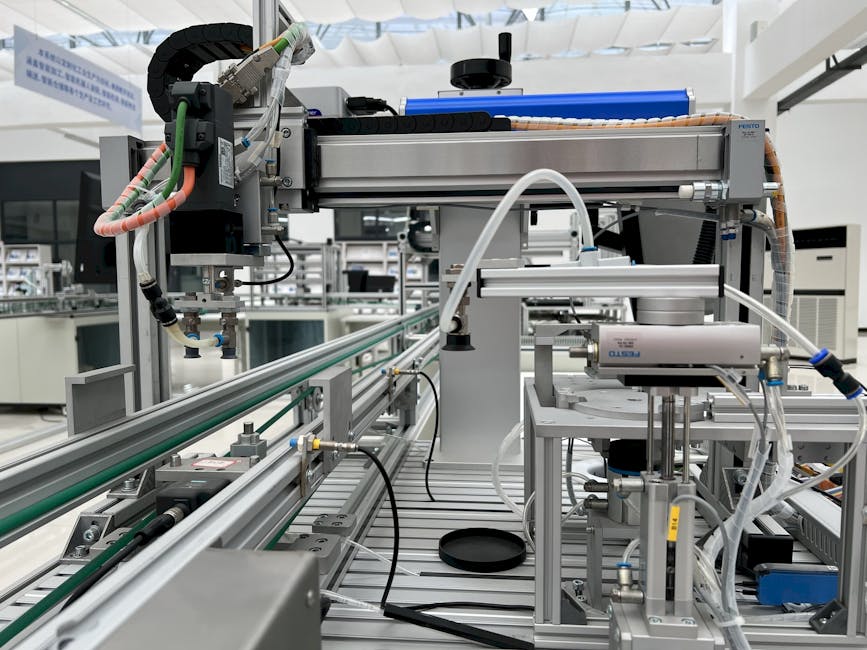
Performance and Efficiency: A Leap Forward
The S7-1500 represents a significant generational leap in performance compared to its predecessor. Equipped with a much faster backplane bus and high-speed processors, the S7-1500 drastically reduces command execution times. This translates directly to faster and more precise control over production processes. For applications requiring complex and synchronized high-speed operations, this performance boost can lead to a considerable increase in production throughput and overall efficiency. Imagine the cumulative gains over a 10-year period from even a small percentage increase in speed and precision across an entire production line.
Enhanced Reliability and Drastically Reduced Downtime
One of the most compelling arguments for upgrading to the S7-1500 lies in its superior reliability and advanced diagnostics. Modern hardware architectures and support for redundancy features, such as hot standby modules, dramatically minimize downtime in the event of hardware failures. Crucially, the S7-1500 features vastly improved built-in diagnostics compared to the S7-300's rudimentary LED indicators. These comprehensive, real-time insights into system health allow maintenance engineers and plant operators to quickly identify and troubleshoot issues, often before they escalate into costly production stoppages. Over a decade, the reduction in unplanned downtime and faster resolution of issues directly impacts the Overall Equipment Effectiveness (OEE) and provides a strong ROI.

Industry 4.0 Ready: Connectivity and Digitalization
The S7-1500 was designed with Industry 4.0 in mind. Its seamless integration with PROFINET (with multiple ports as standard) enables robust communication and data exchange with other systems, cloud platforms, and Manufacturing Execution Systems (MES). This connectivity is vital for manufacturers looking to leverage advanced analytics, implement predictive maintenance strategies, and achieve remote monitoring capabilities. Over the next decade, the ability to collect, analyze, and act upon production data will be a key differentiator. An S7-1500 retrofitted line will be well-positioned to capitalize on these digital opportunities, optimizing processes, improving quality, and increasing operational flexibility.
Fortified Against Cyber Threats: Enhanced Security
Legacy S7-300 PLCs were developed in an era when cybersecurity threats were not as prevalent or sophisticated as they are today. The S7-1500, however, incorporates enhanced security features, crucial for protecting critical industrial control systems from cyberattacks and unauthorized access. As interconnectedness grows, so too does the attack surface. Investing in the S7-1500 is an investment in the long-term security and integrity of your production operations, mitigating the risk of costly breaches, data loss, and production disruption.
Future-Proofing with Advanced Software and Scalability
The S7-1500 benefits from the latest automation software within the TIA Portal, offering improved programming tools and advanced diagnostic capabilities. Its modular design allows for easy expansion and modification of the automation infrastructure, making it highly scalable for evolving business needs and increasingly complex applications. This forward-looking approach ensures that your automation system will remain relevant and adaptable to technological advancements for the next 10 years and beyond, protecting your initial investment and reducing the need for further costly upgrades in the near future.

Simplified Spares and Support: Long-Term Cost Savings
As the S7-300 fully exits the market, procuring spare parts and receiving technical support will become increasingly difficult, costly, and time-consuming. The S7-1500, as the current standard, benefits from a robust supply chain for components and a longer product lifecycle. This translates to readily available spare parts and ongoing support, significantly reducing long-term maintenance costs and minimizing the risk of extended downtime due to part shortages. Over a decade, these savings on spare parts, coupled with reduced troubleshooting and maintenance efforts, contribute significantly to the overall ROI.
Calculating the ROI: Beyond the Numbers
While a precise ROI calculation requires specific financial data unique to each operation, the benefits of migrating from S7-300 to S7-1500 contribute to improved financial performance in several key areas:
- Cost Savings: Reduced unplanned downtime, lower maintenance costs due to improved reliability and readily available spares, and potential energy savings through optimized process control.
- Increased Revenue: Higher production throughput, improved product quality through more precise control, and greater flexibility to adapt to market demands and introduce new products.
- Risk Mitigation: Avoiding catastrophic production stoppages due to obsolete S7-300 components, protection against growing cybersecurity threats, and ensuring long-term operational viability.
Siemens provides comprehensive migration guides to assist manufacturers in planning and executing this upgrade, helping to map out the costs and benefits. Ultimately, the migration from S7-300 to S7-1500 is not merely a technical upgrade; it is a strategic investment that future-proofs your production lines, ensuring operational efficiency, reliability, security, and competitiveness for the next decade and beyond. The ROI is realized not only through direct cost savings and increased output but also through the avoidance of escalating risks associated with maintaining an obsolete system and the unlocking of new capabilities for an Industry 4.0 future.